EZ Ammonia Pipe Labels
Our ammonia stick on labels comply with IIAR Bulletin No. 114 for the identification of ammonia refrigeration piping and it's system components. Learn more about ammonia piping identification.



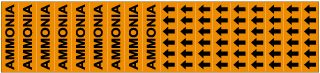







































Ammonia Wrap Around Markers
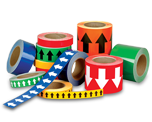
System 1 ammonia pipe markers are made from semi rigid colored PVC to wrap around specific size piping such as 3/4" to 6" O.D pipes. Markers for larger pipes are provided with slotted holes and can be strapped onto pipes using nylon ties. Ammonia System 1 markers provide 360° visibility, include arrows and require no clean-up making their installation easy. Learn more about ammonia piping identification.
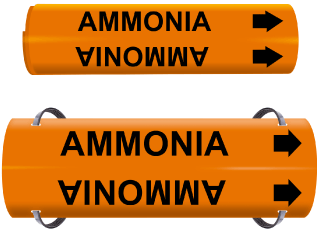
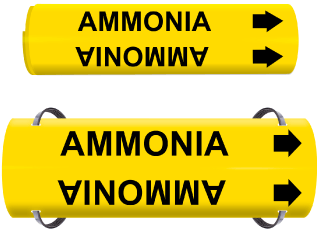

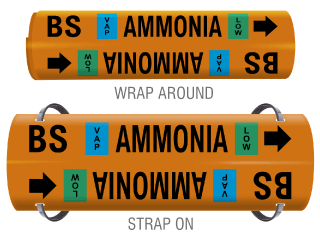
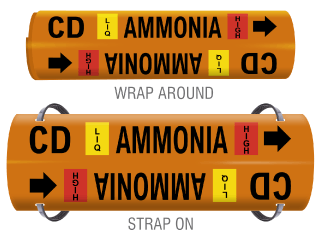
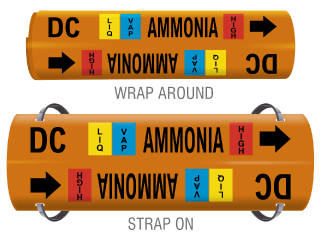
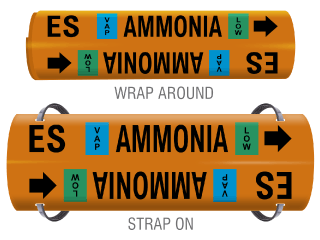
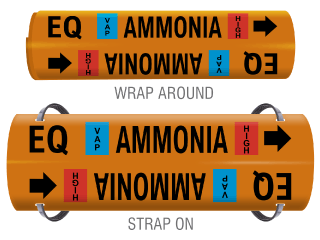
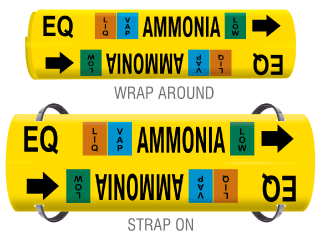
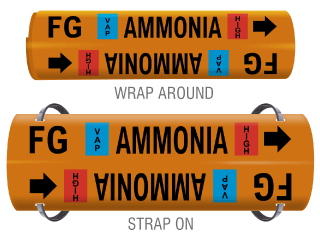
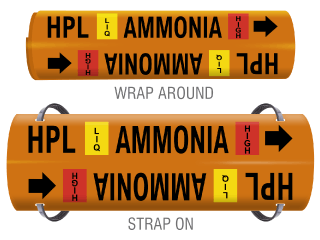
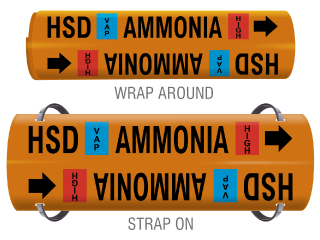
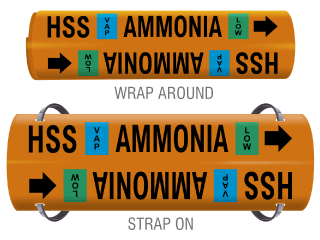
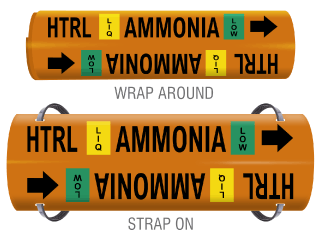
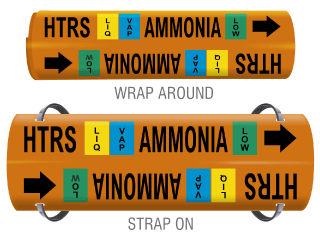
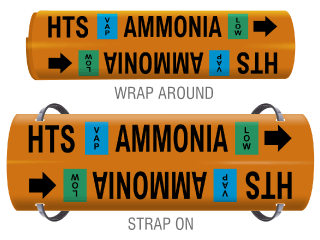
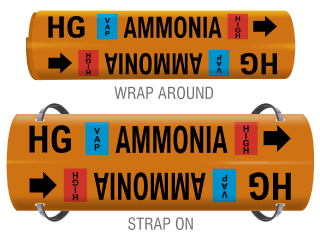
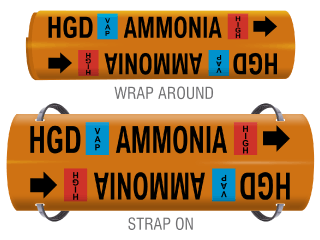
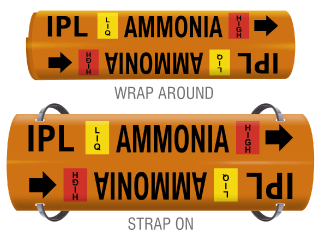
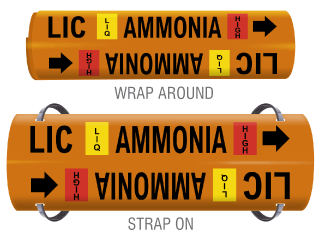
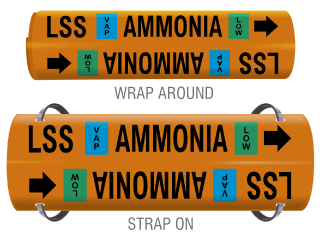
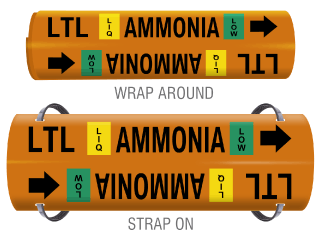
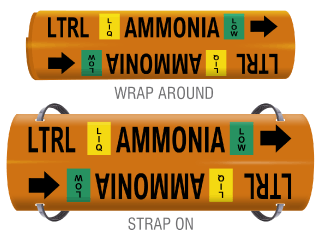
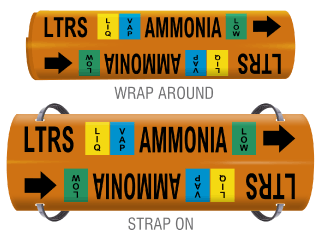
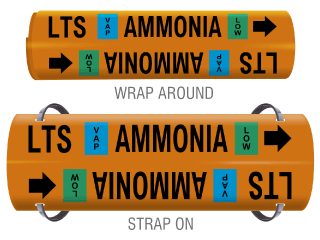
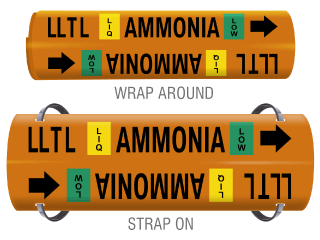
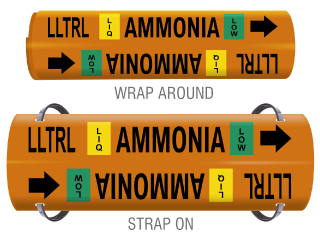
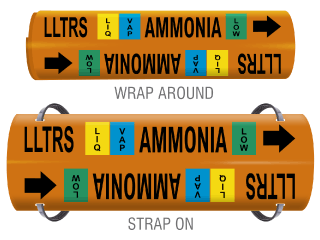
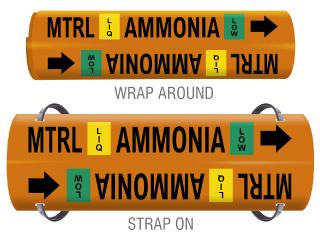
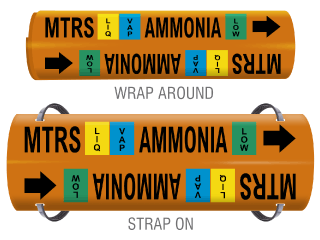
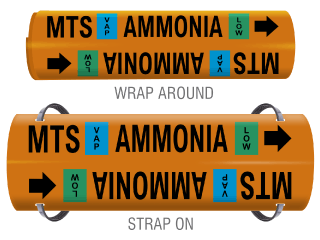
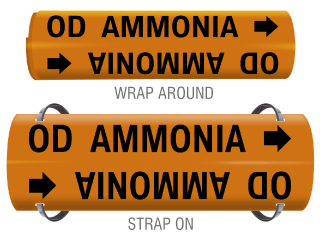
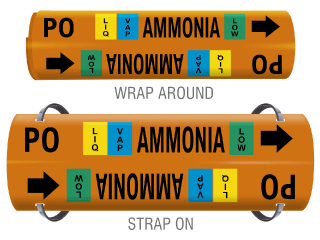
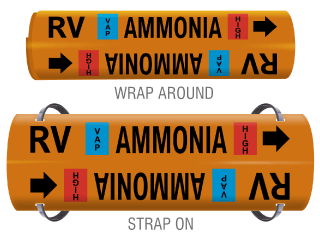
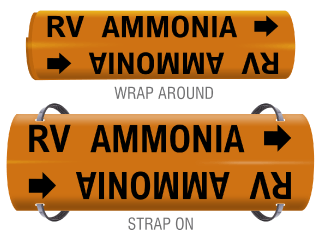
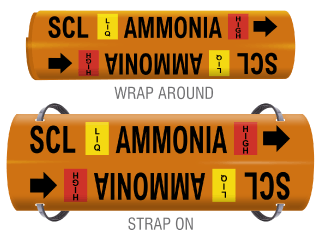
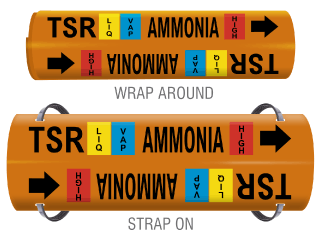
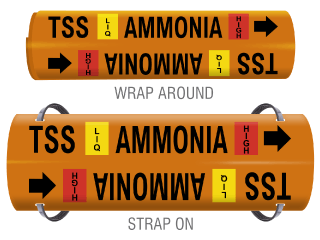
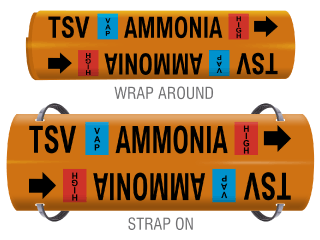
Ammonia Component Markers
Ammonia component stick on labels bear the name of the equipment they identify, per IIAR No. 114 guidelines for identifying ammonia refrigeration piping systems. Learn more about ammonia piping identification.



















Ammonia Reference Chart
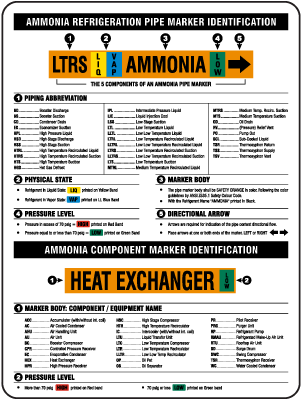
A reference chart fully explains the ammonia refrigeration piping and component identification markers, including the approved abbreviations. This sign should be placed in areas that are conspicuous to operating personnel.
Other Categories You Might Be Interested In
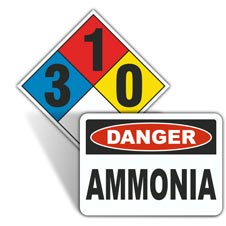
What is Ammonia?
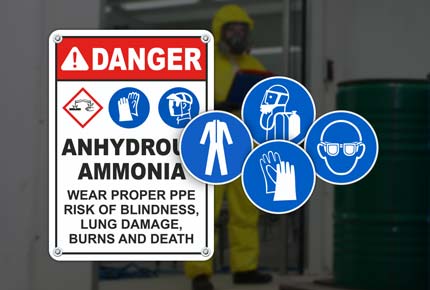
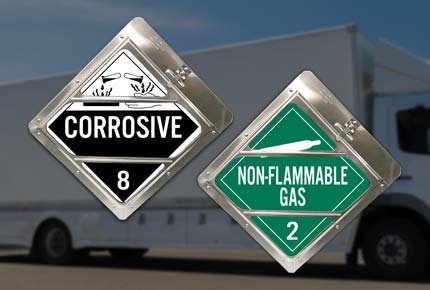
Ammonia is a colorless gas, with a pungent odor. It is widely used as a refrigerant and for the manufacture of products such as pesticides, fertilizer, plastic and other chemicals. Exposure to ammonia in small amounts can cause irritation to the eyes, nose and throat. At higher levels, ammonia may turn fatal due to throat swelling or chemical burns to the lungs. Ammonia is also highly corrosive. With an increased use of ammonia in recent years as a refrigerant, it is important to ensure worker safety by providing proper safety identification.
Identification of Ammonia Refrigeration Piping and System Components
IIAR Bulletin No. 114 provides uniform guidelines for identyfing ammonia refrigeration piping and system components to promote safety, facilitate maintenance and provide vital information to emergency respoders. The bulletin provides further guidance as follows:
3.1 Piping System
A piping system includes all ammonia refrigerant piping and fittings, hand valves, control valves and other devices that are inclusive to the refrigeration lines. Pipe insulation is also considered part of the piping system. Pipe supports, hangers, brackets or other piping accessories are not considered part of the piping system.
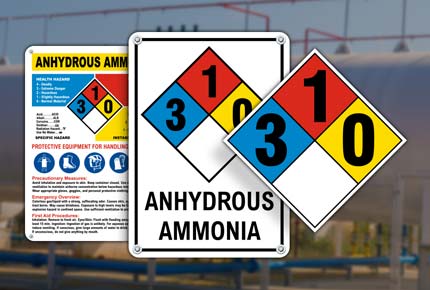
Learn more...The signs above represent our interpretation of material information in combination with NFPA 30 and NFPA’s Fire Protection Guide to Hazardous Materials. Without knowledge of your specific chemical, facility, or hazard, it’s impossible for us to guarantee these signs will match your situation. It is your responsibility to decide which signs are valid for your use and to comply with applicable laws and standards. This site is not intended as a substitute for expert analysis or professional consultation. We make no guarantee of the accuracy of the information on this site and assume no liability of injury or damage as a result of using our products.
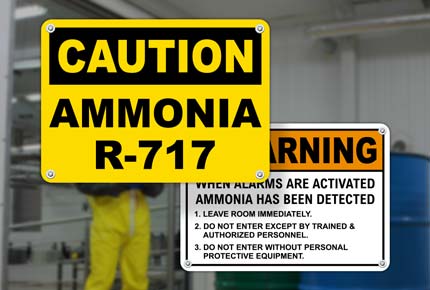
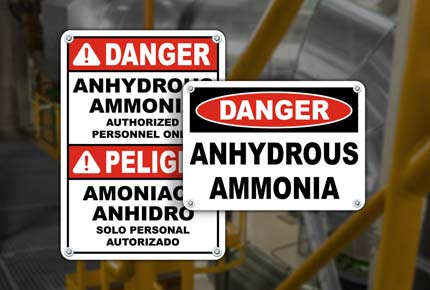
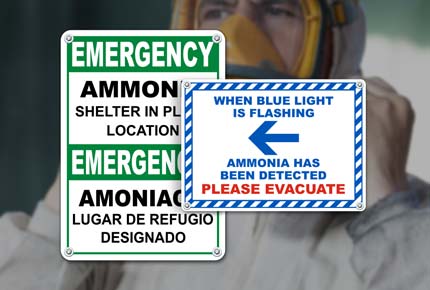
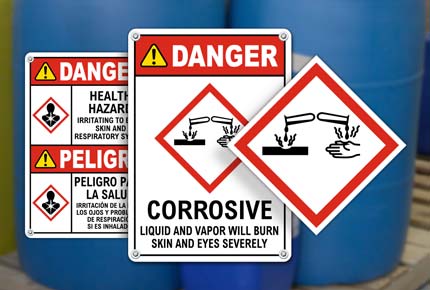
Other Ammonia Signs You Might Be Interested In
Ammonia Pipe Markers FAQs
What are ammonia labels used for?
Ammonia labels are used to mark pipes or systems that transport or store ammonia, signaling to workers and personnel that the contents are hazardous and require caution when handling.
What information should a good ammonia label include?
A proper ammonia label should state the chemical name ("AMMONIA"), indicate the physical state (liquid or vapor), the relative pressure level (e.g. high or low), and - when applicable - directional arrows showing the flow of the substance.
What materials are ammonia labels made from?
They are typically made from durable, chemical‑resistant materials such as heavy‑duty vinyl or industrial‑grade plastic, with adhesives or laminates that resist moisture, ammonia exposure, abrasion, and temperature extremes, ensuring they remain legible over time.
Why is it important to label ammonia pipes properly?
Because ammonia is toxic, corrosive, and can be under pressure, proper labeling helps prevent accidental exposure, chemical burns, inhalation hazards, or incorrect maintenance operations - and supports safe handling and emergency response.
Where should ammonia labels be placed in a facility?
Labels should be affixed on every relevant pipe segment - including near valves, at direction changes, on both sides of wall or floor penetrations, and at regular intervals along long runs - so that the hazard is clearly visible and identifiable before someone interacts with the system.
Are there standards or guidelines for ammonia labeling?
Yes - ammonia labeling often follows recognized guidelines that specify label color, layout, and content: for example, the label body is commonly "Safety Orange" with black "AMMONIA" lettering, and additional bands/colors indicate state and pressure level, to promote consistency and clarity across facilities.