

- Item #
- X8300
Product Information
Details
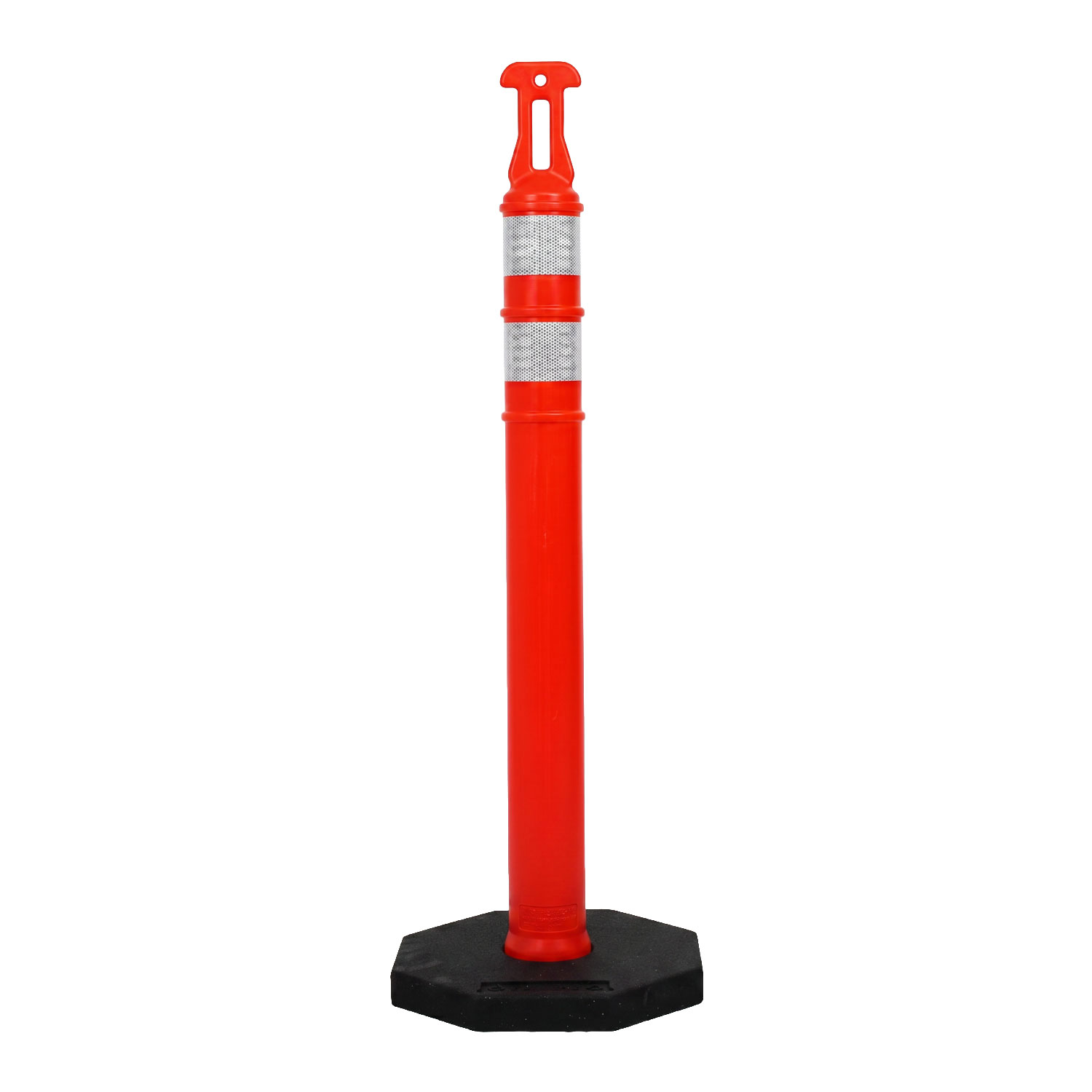
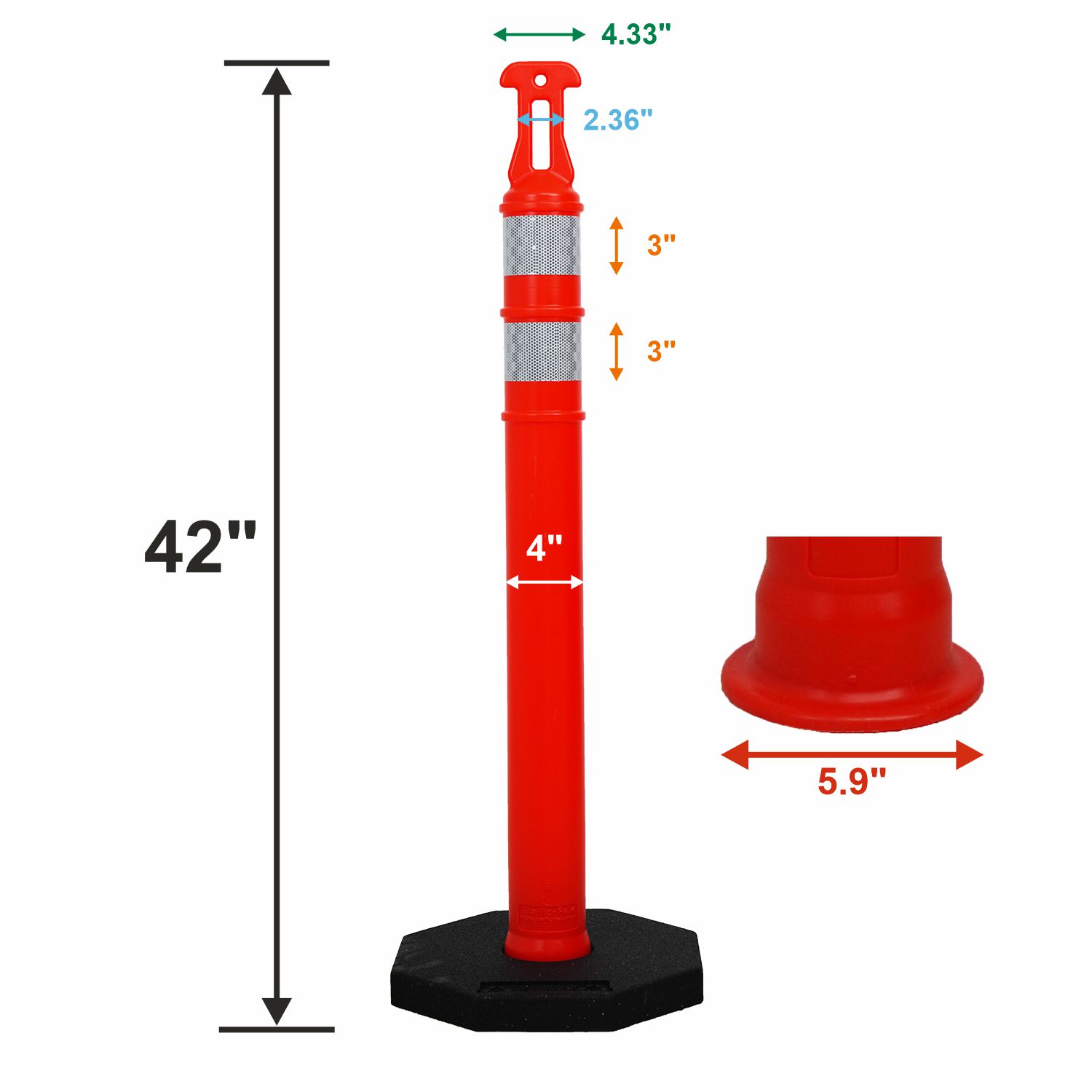
Our 42" Orange Delineator Post with 2 Reflective Bands and a 12 lb. base is designed to enhance visibility and traffic control in work zones, roadways, and parking areas. The bright orange post features two high-intensity reflective bands for superior visibility in low-light conditions. Its sturdy, weighted base ensures stability, making it a reliable choice for temporary or semi-permanent traffic management.
Key Features:- 42-inch tall, high-visibility orange post for effective traffic control
- Two reflective bands enhance visibility in low-light and nighttime conditions
- Durable, impact-resistant design withstands repeated use in high-traffic areas
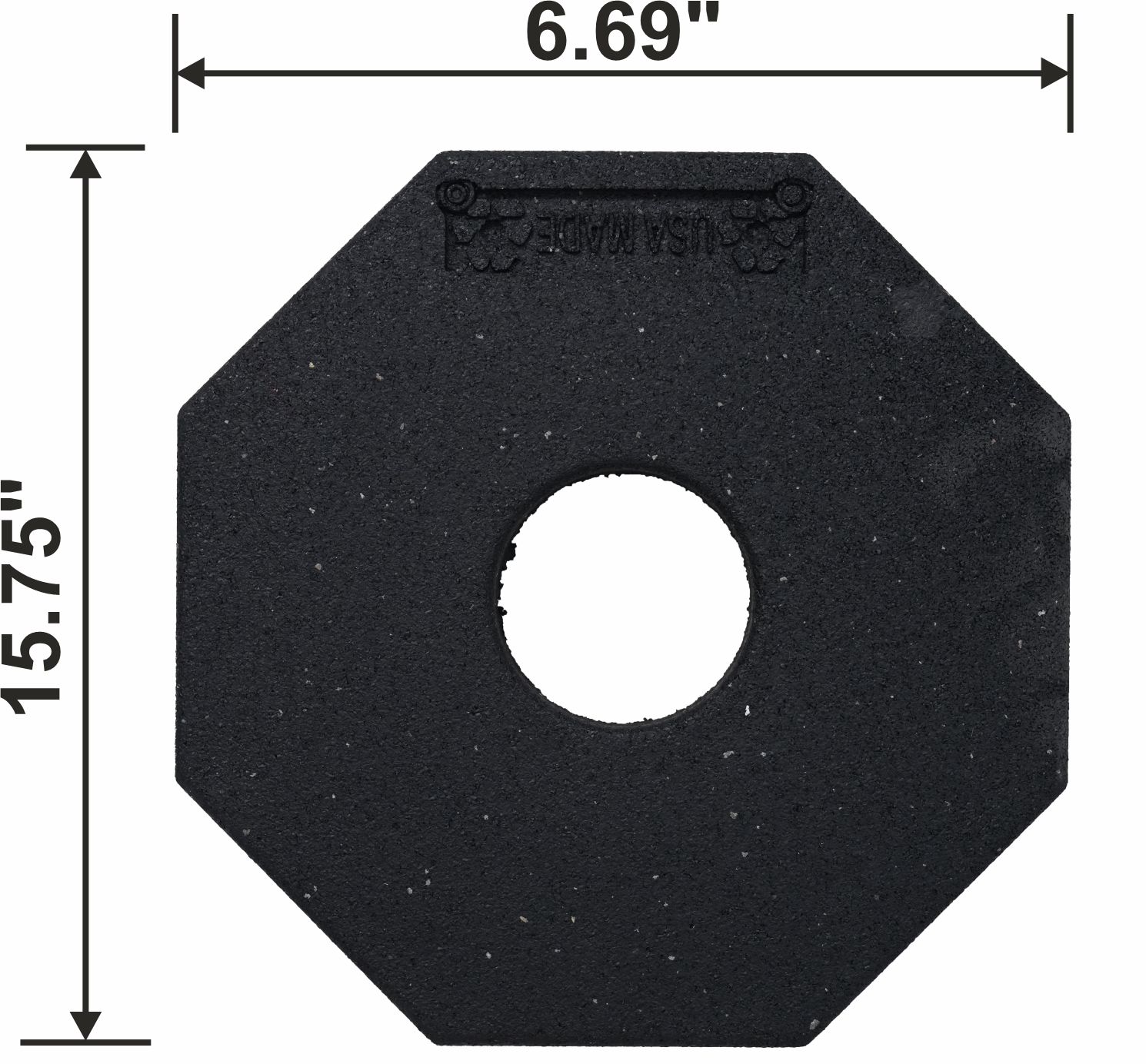
- 12 lb. rubber base provides stability while allowing for easy repositioning
- Ideal for work zones, lane closures, and pedestrian safety applications
MUTCD Standard for Channelizing Devices
Standard:Every channelizing device must meet crashworthy standards. In addition, the retroreflective material utilized on these devices should maintain a consistent color appearance both during the day and at night.
Support:Channelizing devices serve to alert and guide road users about conditions resulting from work activities near or on the roadway. These devices, which include cones, tubular markers, vertical panels, drums, barricades, and longitudinal channelizing devices, facilitate smooth and gradual transitions for vehicles moving between lanes, onto detours, or into narrower roadways. Additionally, they redirect traffic away from work areas, pavement drop-offs, pedestrian or shared-use paths, bicycle facilities, or opposing traffic directions.
Guidance:The gap between cones, tubular markers, vertical panels, drums, and barricades should adhere to specific guidelines. For taper channelization, the spacing should not exceed the speed limit in mph. For tangent channelization, the distance should not surpass twice the speed limit in mph. Moreover, when these devices could potentially lead traffic out of the intended path, they should be extended a distance of twice the speed limit in mph beyond the downstream end of the transition area.
Source: MUTCD 11TH Edition