GHS Pipe Markers




























Other Categories You Might Be Interested In

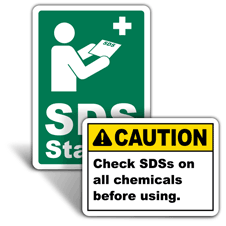
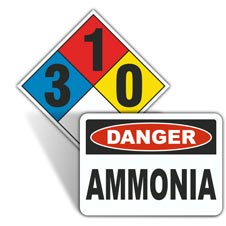
GHS Pipe Markers
Are adhesive backed markers that you peel and stick. Brimar's specially formulated adhesive is applied with a heavy coating to ensure adhesion to a variety of surfaces. Apply markers only to clean and dry surfaces. Minimum of 50°F is required for installation. GHS Pipe Markers comply with ANSI/ASME A13.1 standards if used in conjunction with directional arrows.
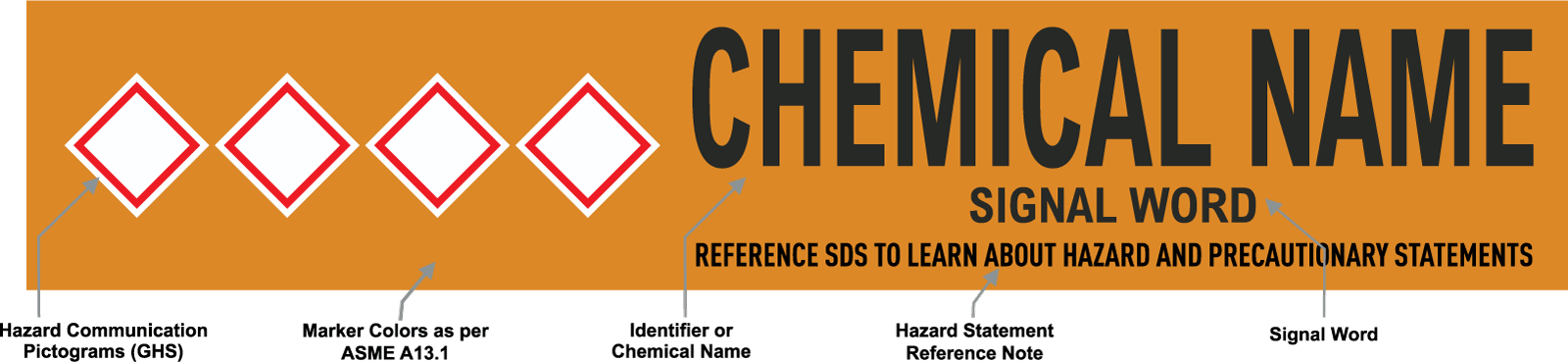
Additional Means of Identification ASME A13.1
ASME A13.1 incorporated the GHS pictograms into the 2015 revision and has recommended their use as part of the legend.
"The applicable GHS pictograms as illustrated below may be included as part of the legend. Where piping is connected to containers that are labeled in accordance with GHS requirements, a corresponding label on the piping may be provided. The corresponding label should contain at least the product name or identifier, the pictogram, the signal word, and the physical, health, and environmental hazard statements."
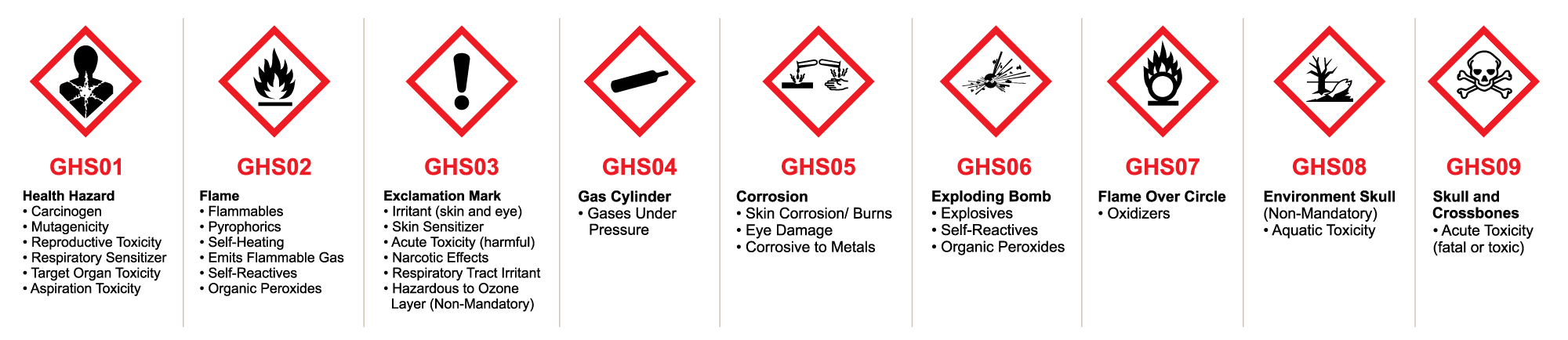
Hazard Communication Pictograms
Nine OSHA approved Hazard Communication pictograms. Each pictogram below is used to alert users of the chemical hazards to which they may be exposed to. The pictogram consists of a black symbol inside a white diamond framed by a red border and each represents a distinct hazard. from no symbols, or up to 6 different symbols can be printed on each marker, depending on the substance you need to identify. The symbol printed on the marker is determined by its chemical hazard classification. Reference to SDS to learn about the hazard classification of each substance you will be exposed to.
GHS Pipe Markers FAQs
What makes GHS pipe markers compliant with industry standards?
They follow GHS protocols and often align with OSHA and ANSI guidelines by using proper hazard pictograms and standardized formatting.
How do GHS pipe markers enhance chemical safety?
These markers identify hazardous contents in pipes, alerting personnel to take necessary precautions when working nearby.
What are the most overlooked benefits of using GHS pipe markers?
Besides compliance, they help streamline inspections, reduce risks of exposure, and support employee training and awareness.
When should GHS pipe markers be replaced?
Replacement is necessary when labels fade, become illegible, or if chemical contents change.
Are GHS pipe markers suitable for regulated facilities like labs and plants?
Absolutely - they are designed specifically for use in regulated and high-compliance environments where chemical labeling is critical.